Kakobuy Spreadsheet index: sixteen shelves, three price points each
Pick a leaf, or read first how the picks were chosen and what one pick line tells you.
How each shelf was cut to three
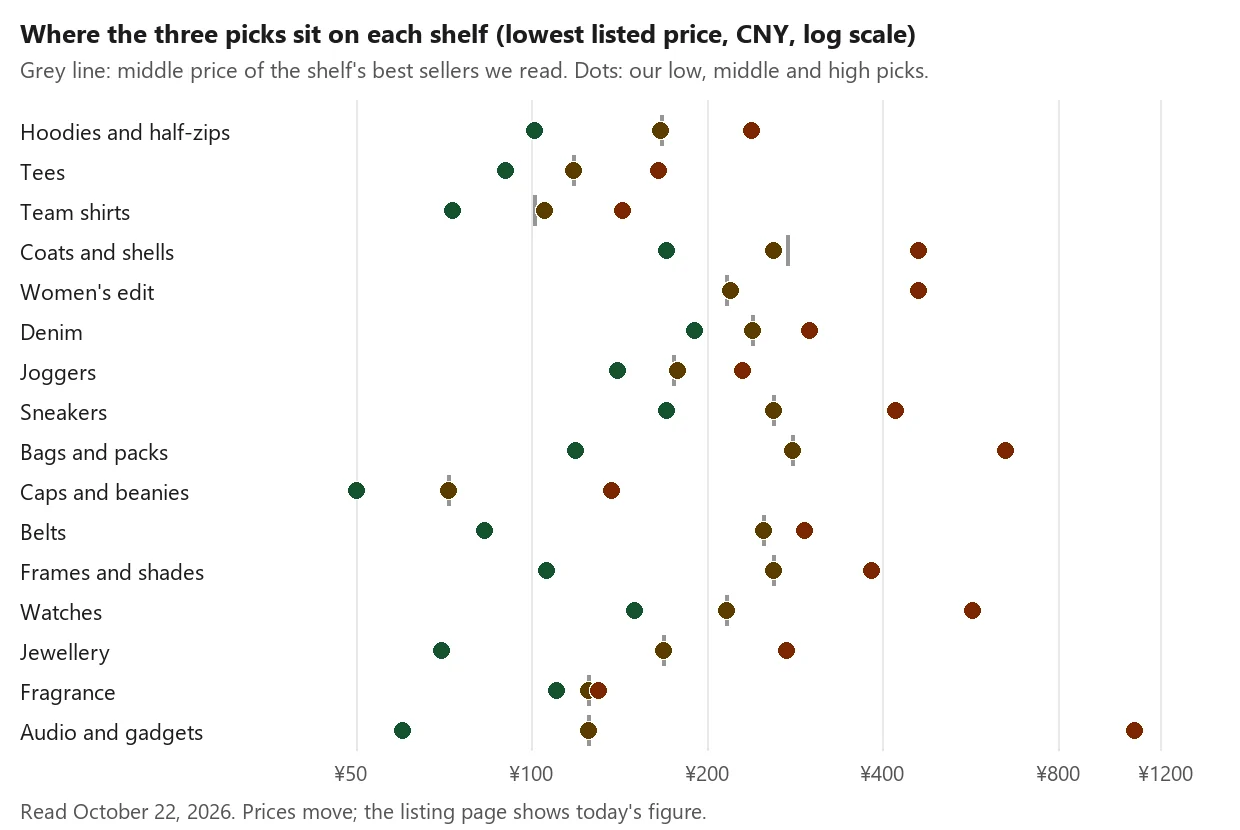
On October 22, 2026 we read up to 192 of the best-selling entries on each catalogue shelf, using the catalogue's own sort by sales. Fragrance and watches are smaller than that, so we read them whole: 35 and 177 entries. We sorted each set by the lowest listed price, which is the cheapest option on the listing's menu, and looked at the entries around one fifth, one half and five sixths of the way up.
From each of those three spots we opened five cover photos and kept the one we could say the most about. We skipped covers with seller phone numbers, wholesale captions in Chinese, watermarks over the product, or a person's face. That is the whole selection rule. It is not a ranking and it is not a popularity contest: every entry we read was already a best seller.
Two shelves broke the pattern. The women's shelf is a keyword search whose top results are mostly bags and earrings, so we kept three garments and two of them come from the middle. Fragrance is so small that its three picks sit within ¥20 of each other.
Reading one pick line
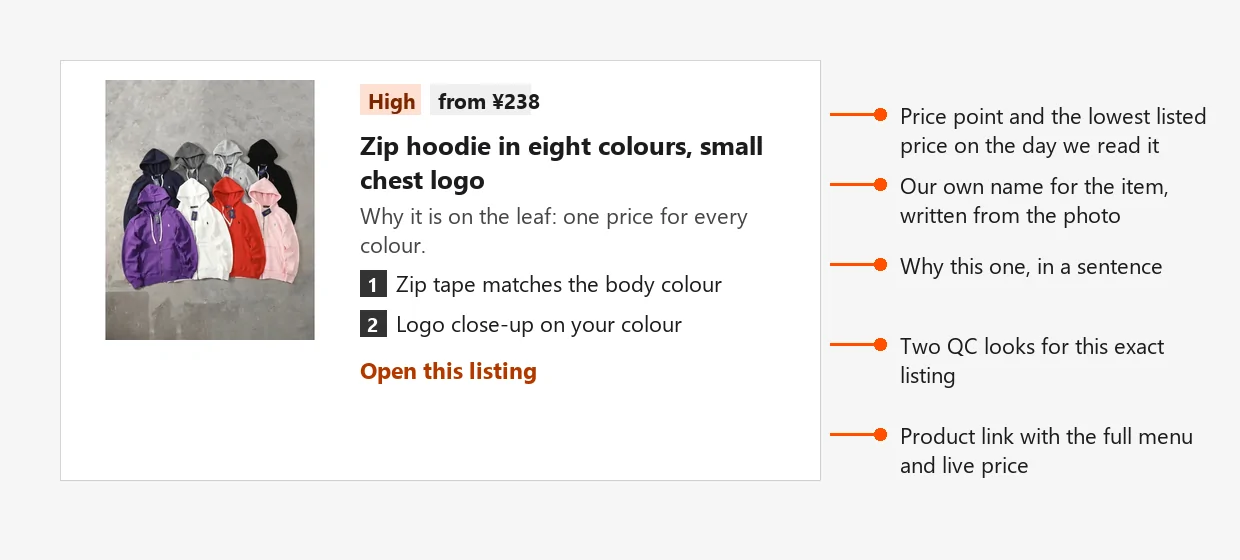
Every pick on a leaf has the same five parts. A price-point tag (low, middle or high for that shelf) with the lowest listed price we saw. A name we wrote from the photo, because listing titles are often brand-stuffed and say little about the item. One sentence on why that listing earned its place. Two looks for the warehouse photos. And the listing link, which carries the live price and the full option menu.
Where a pick has a catch, a short note follows: a wide menu, a cover shared with other entries, a stock figure that cannot be trusted, a battery or liquid that limits the shipping line, or a custom-made item that falls outside the return guarantee.
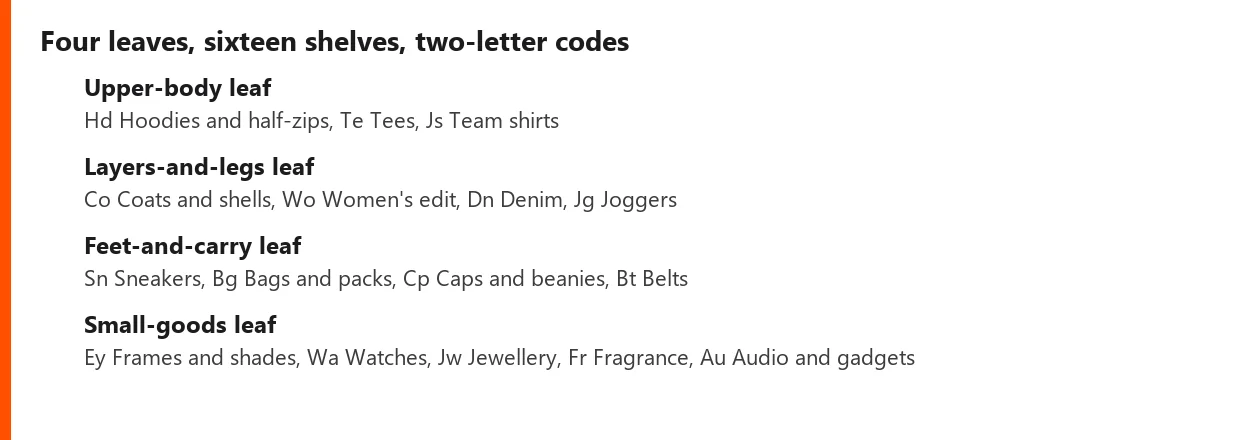
The four leaves and their sixteen shelves
Each shelf below has two links: our leaf, with the three picks and their looks, and the whole catalogue shelf for when you want more than three.
Upper-body leaf
Layers-and-legs leaf
- CoCoats and shells · whole shelf
- WoWomen's edit · search results
- DnDenim · whole shelf
- JgJoggers · whole shelf
Feet-and-carry leaf
- SnSneakers · whole shelf
- BgBags and packs · whole shelf
- CpCaps and beanies · whole shelf
- BtBelts · whole shelf
Small-goods leaf
- EyFrames and shades · whole shelf
- WaWatches · whole shelf
- JwJewellery · whole shelf
- FrFragrance · whole shelf
- AuAudio and gadgets · whole shelf
Deliberate gaps: brands, scores and fixed prices
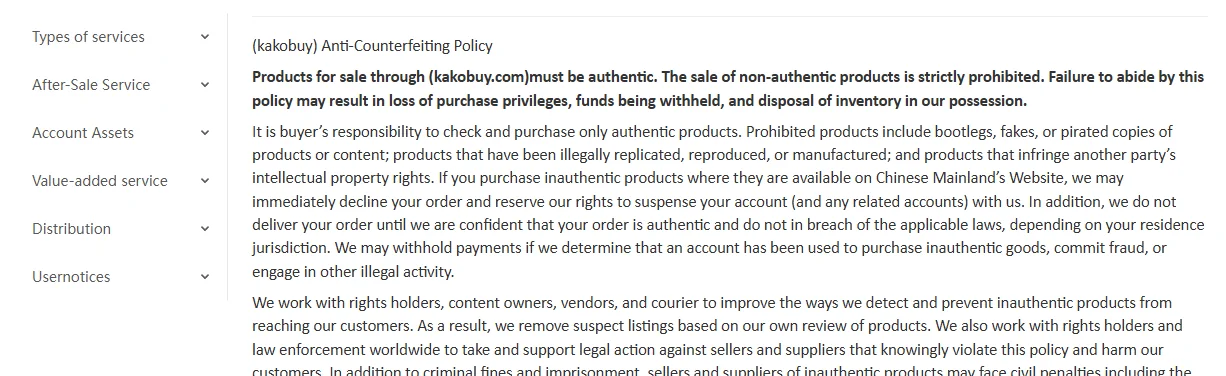
No brand names in our pick names. Listings on these shelves often lean on famous names in their titles and covers, and Kakobuy's own anti-counterfeiting policy is blunt: only authentic goods may be bought through it, and it keeps the right to refuse orders and suspend accounts. We describe what the photo shows and leave the judgment of a listing to you and to that policy.
No scores, no ranking between agents, and no claim that a pick is the best on its shelf. A pick is a well-chosen example of a price point, nothing more. And no prices hard-coded into headings: the figures on the leaves are dated, and the listing link always shows the current one.